Clinical documentation research · Kerala, India

Clinical intelligence.
Beyond transcription.

Clinoria is a research initiative studying how multilingual clinical conversations become structured documentation that keeps its meaning: what was denied, what was resolved, who it was about, how certain it was, and which words support each line.

  • Pre-clinical research
  • Deterministic drafting
  • Clinician sign-off required
The Clinoria review screen on a synthetic ultrasound case: a structured report marked ‘Fact graph validated’, listing findings for the right kidney, left kidney, hydronephrosis and renal calculi.
Structured findings rendered from a validated fact graph — synthetic case
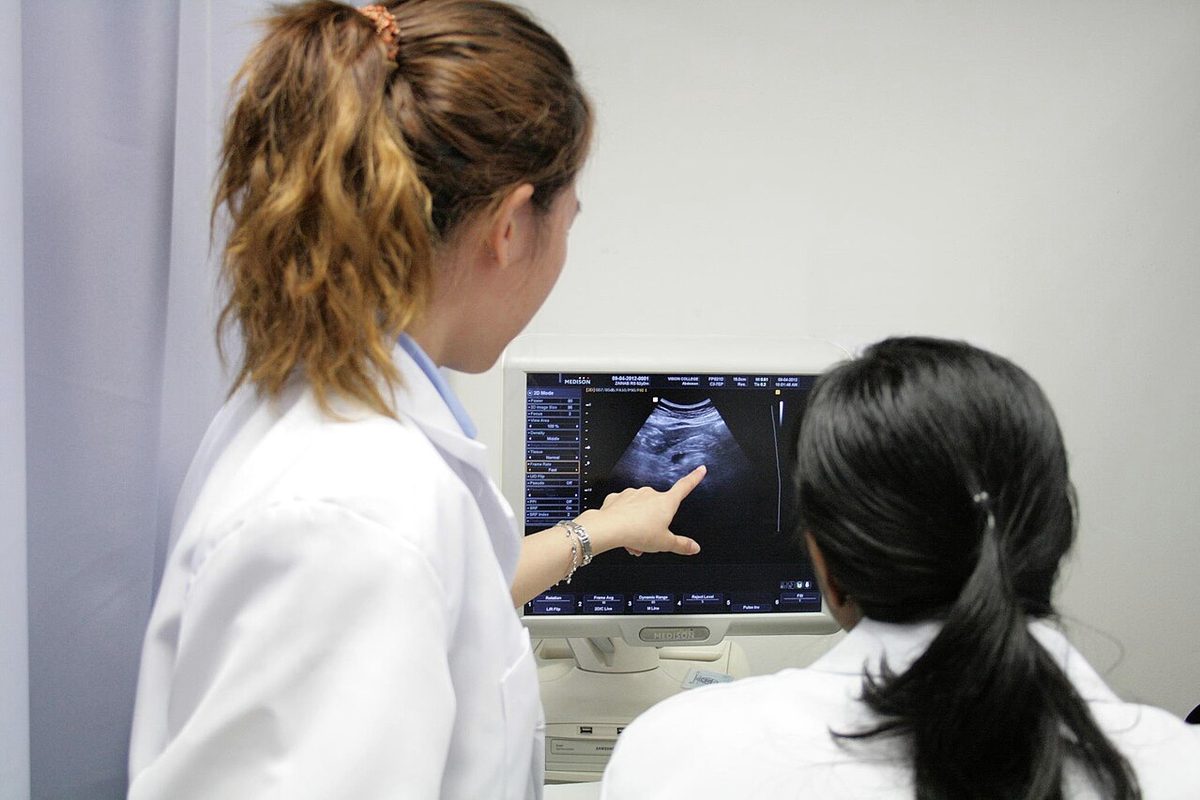
Two clinicians reviewing an ultrasound image on a diagnostic monitor in an imaging room.
Diagnostic imaging workflow
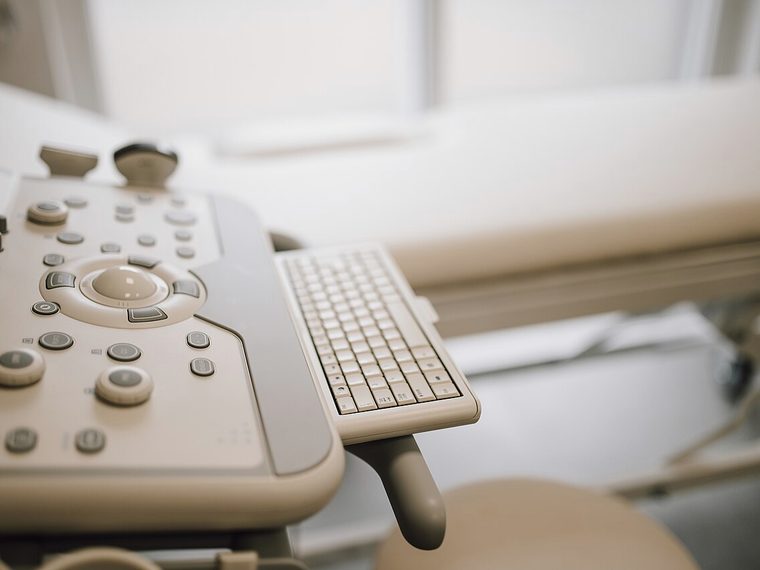
Control panel of a diagnostic ultrasound system in an examination room.

Synthetic data Prototype screenshot on a synthetic development case — no patient data. Photographs: Vision College (CC BY-SA 4.0) and Shixart1985 (CC BY 2.0), both via Wikimedia Commons. Modifications: cropped and resized.

We are not announcing that clinical AI is solved. We are publishing what we have built and what still fails.

  • 01Evidence before fluency
  • 02Failures published, not hidden
  • 03Clinician authority in code

The problem

A clinical conversation carries meaning that transcription cannot keep.

Speech-to-text writes down sounds. Summarisation compresses detail into prose. Neither preserves what a clinician actually signs their name to: the exact denial, the exact timeline, the exact uncertainty. In medicine those distinctions change decisions.

The default pipeline

Transcribe, then summarise

  • A denial can be dropped, or worse, reattached to the wrong finding.
  • “Had fever last week, none now” collapses into one tense and one claim.
  • The summary is fluent, so nothing signals which lines are unsupported.
  • There is no way to ask which spoken turn produced a given sentence.

Clinoria

Extract facts, then render deterministically

  • Discrete clinical facts are extracted before any prose exists.
  • Negation, temporal status, subject and laterality are explicit fields.
  • Every finding carries the transcript span that supports it.
  • Nothing is generated: the same fact graph always renders the same note.

Our approach

Interpretation is a separate, inspectable stage.

The transcript is treated as evidence, not as a draft. Clinoria's job is to decide what each part of the conversation means clinically, record that decision in a structure you can read, and only then write a note from it.

01

Conversation

Consultation audio or focused dictation, captured with an explicit statement of which transcription route is used.

02

Transcript

Speaker-attributed text. Treated as the evidence base for everything downstream, never edited silently.

03

Clinical facts

Concepts with a closed status vocabulary, subject, laterality, temporality and a source span.

04

Structured draft

A note rendered from the fact graph under a department template, validated before it can be reviewed.

No cloud LLM drafts the note Drafting is a deterministic renderer over the validated graph. There is no step in which a language model writes free prose into a patient record.

Clinical intelligence

The six distinctions we treat as data.

Each of these is a field in the fact graph, not a nuance left to a summariser's judgement. Where the extractor cannot populate a field reliably yet, we say so.

  • Negation

    A denied finding is stored as ABSENT, which is a different fact from a finding that was never mentioned.

  • Temporality

    Historical and current states coexist: fever resolved last week and no fever today are both retained.

  • Subject attribution

    “My mother has diabetes” is attributed to the mother, not the patient.

  • Uncertainty

    Hedged statements are meant to stay hedged rather than hardening into assertions.

  • Contradiction

    When a patient denies and later affirms the same symptom, both facts are kept side by side.

  • Provenance

    Every fact points at the transcript span it came from, down to the turn.

Where this is honest and where it is not

Negation, temporality, subject attribution, contradiction and provenance are implemented and tested. Uncertainty is defined in the schema but is not yet populated reliably by the extractor — hedged language currently arrives as null. We describe the architecture here and the defects on the research page, because a capability list without a failure list is marketing.

Read how each distinction is represented

Multilingual clinical research

Malayalam first, because that is where the problem is hardest.

Kerala clinicians do not speak one language at a time. A consultation moves between Malayalam, English and a Malayalam written in Latin characters. That mixing is the research problem, and it is not solved here.

  1. Demonstrated

    Malayalam script

    • Clause-scoped negation: പനി ഇല്ല is recorded as fever absent
    • Mixed Malayalam–English symptoms in one consultation
    • 248 Malayalam-focused unit tests in the current suite
  2. Known to fail

    Malayalam in Latin script

    • “Pani illa” extracts no facts at all
    • “Chest pain illa” inverts polarity and records pain as present
    • Cause identified: negation rules run on the speech-recognition path, not the typed-text path
  3. Planned research

    Code-switched corpus

    • Consented clinical speech collected across Kerala's districts
    • Clinician-authored gold documentation for each recording
    • Zero use of unconsented data; no real transcripts published

Read the Malayalam research note

The working prototype

What it actually produces.

These are real screens from the prototype, run on synthetic cases. We have not published a public demo: the extraction defects on the research page are reachable from a free-text box, and a live endpoint would show them without anyone present to explain them.

Clinoria transcript panel for a synthetic ultrasound dictation: the language is set to English, a warning states that speaker roles were not identified, and a single dictated paragraph describes both kidneys, hydronephrosis and renal calculi.
Synthetic Transcript panel from the prototype, shown unedited — including its own warning that speaker roles were not identified.

Three things worth noticing

  • It surfaces what it could not determine. That yellow warning is the product admitting it does not know who was speaking, rather than guessing and attributing a finding to the wrong person.
  • Status is a closed vocabulary. Present, absent, questioned, resolved — not adjectives. That is what makes the next screen reviewable.
  • Empty sections stay empty. Where the conversation said nothing, the note says “Not documented” instead of inventing a plausible plan.

A demonstration takes about twenty minutes and runs both the text and the audio paths separately, because they behave differently.

Request a demonstration

Research and evaluation

How we test it, and what we have found wrong.

Evaluation here is engineering evaluation: synthetic case sets, adversarial inputs, unit tests and a written defect register. It is not a clinical trial, and no independent validation exists yet.

Method

Frozen development suite

A 12-case ultrasound suite used to detect regressions. Internal developer evaluation set — not an efficacy study, and not a published benchmark.

Method

Adversarial cases

Negated red flags, mid-sentence corrections, compound family history and hedged language, written to break the extractor rather than flatter it.

Finding

Real defects, unresolved

Polarity inversion on code-switched negation, fabricated laterality passed by the validator, and dropped family-history clauses are all reproducible today.

Read the research page and the defect register

For clinicians

We need evaluation, not encouragement.

The single most useful contribution a Kerala clinician can make is not praise. It is consented, de-identified consultation transcripts with your own gold-standard documentation for each — so that “correct” stops meaning “the engineer thought it looked right”.

What participation involves

  • A 20-minute demonstration on synthetic cases.
  • You run the inputs. You try to break it.
  • If you continue: a written protocol, consent forms, and a de-identification step you control.
  • You keep your transcripts. Nothing is published without separate written agreement.

Research collaboration

See it work, and see it fail, on cases you choose.

Demonstrations run live with the engineering team on synthetic data. Text and audio are demonstrated separately, because they behave differently.

Assistive draft only — every note requires credentialed clinician review and sign-off. Pre-clinical. Not a medical device. Please do not send patient data through this website.